Communication
About Law.
Around People.

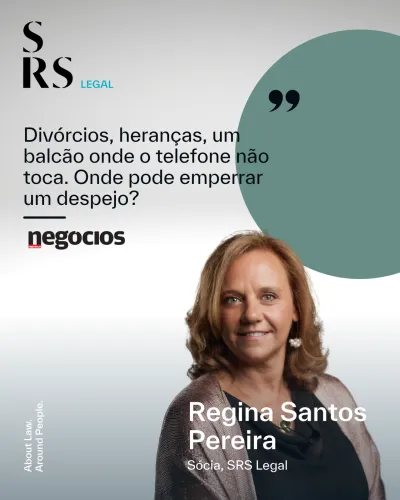
“Divorces, inheritances, and a desk where the phone never rings. Where can an eviction process get stuck?” (with Regina Santos Pereira)
Regina Santos Pereira is a Partner at SRS Legal, where she focuses on Litigation and Arbitration, and is a specialist in real estate law, particularly urban tenancy, an area in which she has extensive experience.
In this episode of the *Urbanidades* podcast, the specialist reviews the legal mechanisms available when eviction becomes necessary, namely in cases of non-payment of rent, at a time when the Government was preparing to introduce new legislation to expedite these processes.
In her view, it is “a myth” that it is impossible to evict tenants in Portugal. However, the process is complex, bureaucratic and often lengthy, which discourages landlords. The issues lie more in the system’s operability than in the legislation itself. At the Tenant and Landlord Desk, more commonly known as the tenancy desk, one of the main obstacles relates to initial refusals. The problem, the lawyer explains, “arises at the outset”, in the way the procedure was designed, allowing for frequent refusals to be triggered.
This may occur for reasons as simple as the property owner having passed away and the eviction being carried out by heirs; or because the tenant was married at the time of signing the contract and has since divorced. Added to this is the fact that the desk “does not have legally qualified staff” and does not carry out “a legal assessment of the documents” submitted, but rather a more “formalistic” review. Everything is processed through online forms, and there is not even the possibility of making a phone call to resolve a minor issue.